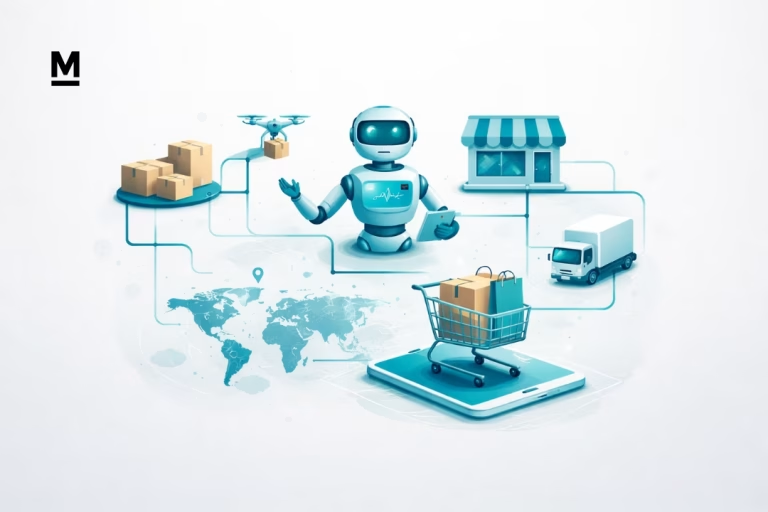
The world of e-commerce is evolving rapidly, and businesses are constantly seeking innovative ways to stay competitive. One such strategy is extending a traditional e-commerce store into a multi-vendor marketplace.
In this blog, we will delve into the benefits of transitioning to a marketplace. But first, let’s learn a bit about what a marketplace is.
Table of Contents
What is a Marketplace Platform?
A marketplace is a dynamic platform that enables businesses to expand their reach by connecting multiple sellers and buyers within a single, centralized digital environment. While well-known examples include platforms like Facebook Marketplace, Amazon, or eBay, many retailers are now adopting marketplace models, seamlessly integrating them with their existing commerce systems. This approach allows retailers to diversify their offerings, enhance customer experiences, and unlock new revenue opportunities.
If you’re considering extending your e-commerce business to a marketplace, you may wonder if it would be similar to Facebook Marketplace or eBay. The answer is that it depends. There are two types of marketplaces: curated marketplaces and open marketplaces.
- Curated Marketplace – The platform owner selects which sellers to onboard and determines which products to feature on the marketplace. Essentially a multi-vendor storefront.
- Open/Free Marketplace – Third-party sellers join and sell autonomously, as seen with platforms like Amazon and eBay.
For businesses looking to expand their operations, curated marketplaces often provide greater control, ensuring quality and alignment with their brand. Now, let’s explore the key benefits of extending your business into a marketplace.
6 Key Benefits of a Marketplace
1. Revenue Growth Opportunities
The marketplace model generates revenue through various streams, such as transaction fees, listing fees, and premium services for sellers, rather than relying on the margin between wholesale and retail prices.
- Commission Fees: Earn a percentage of each sale made by third-party sellers.
- Subscription Fees: Charge sellers for access to the marketplace or premium services.
- Advertising Revenue: Provide sellers with the opportunity to promote their products through sponsored listings and advertising.
Marketplaces also increase sales by offering broader product ranges and encouraging cross-selling and upselling. For instance:
- Expanded Offerings: By onboarding third-party sellers, businesses can offer a broader product range without holding additional inventory.
- Cross-Selling/Upselling: Cross-category or complementary product listings can attract more customers and encourage higher cart values.
According to a 2024 survey conducted by Statista, online marketplaces account for nearly 30 percent of global online shopping orders. In a separate report, they forecasted that the revenue in the e-commerce market is projected to reach US $4.8 trillion in 2025. Driven by shoppers’ desire for convenience and brands’ pursuit of global reach, online marketplaces are poised for continued growth in 2025.


2. Increased Product Range for Enhanced Customer Retention
No matter how loyal a customer is to a brand, the customer will eventually lose interest if the business fails to innovate.
One effective way to encourage customer loyalty is to offer a diverse range of relevant products. However, expanding your product range can be complex and expensive. Unlike traditional e-commerce, marketplaces can use third-party sellers to provide a vast product catalog.
A marketplace can quickly expand your product range by:
- Product Line Extension: Add variations to existing products.
- Product Diversification: Venture into adjacent categories.
- Brand Extension: Enter new markets with entirely new products.
In June 2024, Tesco partnered with Marketplacer to launch its marketplace. Within two months, the number of SKUs increased from 9,000 to 20,000, and by the beginning of January, Tesco had surpassed 300,000 SKUs. The expansion included a wide range of categories, such as garden supplies, DIY products, homeware, toys, sports equipment, baby items, beauty products, and pet care.
Overall, a marketplace provides an opportunity to launch new products, explore various categories, and enter the market with reduced risks and lower expenses commonly associated with these strategies. This makes offering customers a diverse range of products much quicker and cheaper, unlike traditional methods of product development & sourcing, which can involve lengthy timelines and high costs.
Explore how Marketplaces help in expanding your product range
3. Scalability and Flexibility
When scaling an e-commerce business, adopting a marketplace model stands out as one of the most cost effective strategies available. A marketplace allows the retailer to scale rapidly by onboarding multiple sellers and ingesting their products, making it easier for operators to expand.
- Market Expansion: Platforms can enter new markets by adding relevant vendors in adjacent or complimentary categories.
- Trend Adaptability: Marketplaces can quickly respond to industry trends by incorporating new product categories or services. In the same way, it also allows you to unload underperforming products without incurring significant losses.
- International E-Commerce: Expanding into global markets can be complicated due to logistics, shipping, and regulatory compliance. However, partnering with local sellers in different regions or countries can simplify this process. This partnership facilitates a smoother entry and operational strategy into global markets, enabling the business to build an international presence with relative ease and reduced risk.
- Budget Routing: Funds traditionally earmarked for inventory and product development can be reallocated to drive growth in other critical areas, such as marketing. Additionally, these savings can be reinvested into the technology stack, empowering the platform to scale seamlessly as the business grows. This agile approach not only reduces operational constraints but also supports innovation and adaptability in a competitive market.
For example, Myer expanded its product offerings and drove growth without the traditional constraints of holding inventory. This approach allowed Myer to onboard a diverse range of third-party sellers, such as furniture and play equipment, delivering more options to customers while reducing overhead costs.
Investing in its digital infrastructure enabled Myer to scale quickly, adapt to changing consumer demands, and maintain its position as a leader in the retail space.
4. Operational Efficiency
Marketplaces streamline operations, enhancing efficiency and reducing overhead costs. By adopting a marketplace strategy, businesses can focus on strategic goals like expanding their product offerings, improving the customer experience, and fostering long-term vendor relationships.
Here’s how marketplace platforms streamline your operations:
- Reduced Inventory Management: Sellers are responsible for managing their own product inventory, which significantly reduces the burden on the marketplace operator. Sellers update their inventory which then syncs to your e-commerce platform.
- Simplified Logistics: The logistics of order fulfillment and shipping are handled by the sellers themselves. This minimizes operational complexity for the marketplace operator and allows vendors to optimize delivery processes to meet customer expectations.
- Centralized Communication: Manage all vendor and supplier communications through a single dashboard. This centralized system simplifies the management of relationships, enabling operators to:
- Monitor and engage with multiple vendors simultaneously.
- Foster timely communication to address queries or resolve disputes efficiently.
- Enhance collaboration through updates and announcements.
- Standardized Processes: Operators can create a unified approach to vendor onboarding, compliance, and performance monitoring to ensure that all vendors adhere to marketplace policies.
- Automated Workflow Management: Tools & automation through API reduces errors and manual tasks. This includes importing products, managing orders, tracking, and handling returns and refunds. This allows marketplace operators to focus on other essential aspects of the business rather than operational micromanagement.
5. Enhanced Customer Experience
Customer Experience (CX) is a cornerstone of all e-commerce businesses, not just marketplaces. According to a a PWC survey, 73% of shoppers consider experience an essential factor in their purchasing decisions, behind price and product quality. Customer experience is even more critical today as shoppers have grown to expect personalization from online retailers.
So, how exactly do marketplaces enhance the customer shopping experience?
- Convenience: Customers can find a diverse range of products under one roof, improving satisfaction and customer retention.
- Curated Product Selection & Recommendations: By curating products, the marketplace can offer highly targeted recommendations based on customer preferences or trends, further enhancing personalization.
- 56% of consumers say they will become repeat buyers after a personalized experience.
- Exclusive Offerings: Partnerships with select vendors allow the marketplace to offer exclusive products or limited-edition collections, attracting potential customers seeking unique items.
- Quality Assurance & Brand Alignment: The business vets sellers and products before onboarding them, ensuring high-quality offerings. Sellers and products are chosen based on compatibility with the marketplace’s brand identity, providing a cohesive shopping experience.
- Seamless Brand Experience: Customers interact with a unified brand rather than various sellers. From product presentation to post-purchase support, the experience is centralized and streamlined.
- Exclusive Partnerships and Events: The marketplace can collaborate with sellers for exclusive events, such as product launches, flash sales, or loyalty programs, adding value for customers and sellers alike.
6. Building a Network Effect
Network effects drive marketplace growth by creating a self-reinforcing cycle in which increased participation enhances the platform’s value for all users. This dynamic is central to achieving scalability, market dominance, and long-term success.
- Positive Feedback Loop: Network effects create a cycle where growth fuels more growth.
More buyers → More sales for sellers → More sellers join → Wider product selection → More buyers join → Cycle repeats.
- Market Dominance: As more curated products are sold on your platform, your platform will become an authority in your niche. This will make it harder for competitors to gain a slice of the market.
- Reduced Customer Acquisition Costs: Happy customers who share their experiences with others encourage new customers, which means less need for heavy advertising.
- Trust and Reputation Building: As the customer base grows, so does the platform’s reputation as a reliable and comprehensive marketplace.
Conclusion: Why Invest in a Marketplace Platform?
Extending to a marketplace empowers businesses to stand out in a competitive e-commerce landscape by offering unique value propositions:
Recap of Key Marketplace Benefits
- Revenue Growth Opportunities: The marketplace model diversifies revenue through transaction fees, subscriptions, advertising, and increased sales volume by cross-selling and upselling.
- Increased Product Range: Marketplaces allow businesses to expand product offerings efficiently by leveraging third-party sellers, reducing risks, and cutting costs compared to traditional methods.
- Scalability and Flexibility: Marketplaces enable rapid scaling, trend adaptability, global market entry, and strategic allocation of funds for growth.
- Operational Efficiency: Marketplaces streamline operations by reducing inventory management, simplifying logistics, automating workflows, and centralizing vendor communication.
- Enhanced Customer Experience: Marketplaces provide convenience, personalized recommendations, exclusive products, and a seamless, curated shopping experience.
- Building a Network Effect: Network effects drive exponential growth by increasing platform value as more users join. This not only enhances the user experience but also reduces customer acquisition costs, creating a competitive advantage that helps establish and sustain market dominance.
In conclusion, transforming a traditional e-commerce store into a marketplace is not just a strategic move; it is more of a necessity in today’s dynamic online shopping landscape. As successful examples like Tesco demonstrate, the ability to scale quickly and respond to market demands can lead to substantial growth and increased profitability.
Furthermore, as online shopping trends continue to evolve, marketplace platforms are well-positioned to capture a sizeable share of the burgeoning e-commerce market, projected to reach $4.8 trillion by 2025.
As customer needs change, focusing on convenience, variety, and curation has become more important than ever. Extending your e-commerce business to a marketplace can help you stay relevant and succeed in today’s fast-paced market.
Embrace change, adapt, and enjoy the benefits that a marketplace can offer.
Get in touch with us to discover how Marketplacer can transform your business.