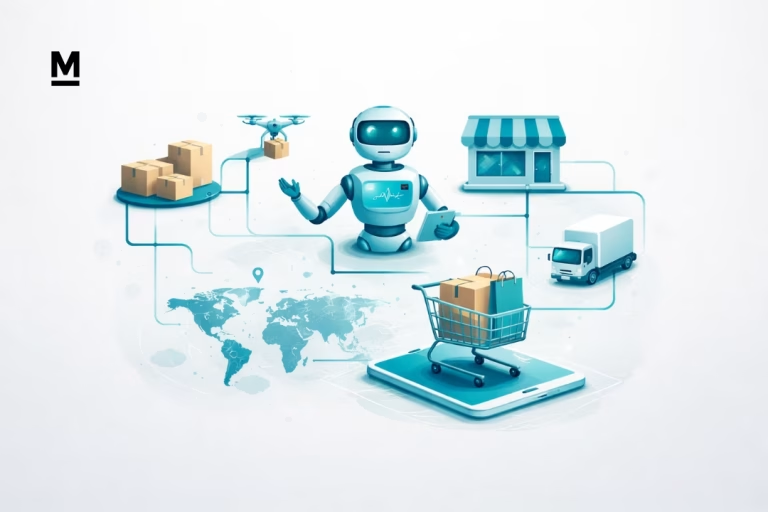
The marketplace business model has emerged as one of the most transformative forces in the global economy, revolutionizing how goods, services, and information are exchanged.
What Is a Marketplace Business Model?
A marketplace business model connects buyers and sellers on a centralized platform. Marketplaces typically do not own inventory; instead, they act as a middleman, facilitating transactions and taking a share of the revenue through commissions, subscriptions, or other means. The scalability and adaptability of this model make it appealing to entrepreneurs and investors alike.
Table of Contents
Difference Between Marketplace and Traditional Retail Model
A key feature of the marketplace business model is its scalability and cost-efficiency. Unlike traditional retail models, marketplaces do not require extensive inventory or physical storefronts, significantly reducing overhead. Instead, sellers shoulder inventory costs while the platform focuses on technology, user experience, and customer acquisition. This collaborative approach increases the marketplace’s scalability and fosters an ecosystem that thrives on variety and competition.
Unlike traditional e-commerce or retail stores, the marketplace model shifts the emphasis from direct sales to empowering third-party sellers. This decentralization allows marketplaces to expand rapidly, reaching global audiences while offering diverse products and services. By leveraging technology to streamline operations and minimize barriers, the marketplace business model has become a cornerstone of modern e-commerce, catering to the evolving needs of a connected global economy.
What Are the Types of Industry Marketplace Models
The marketplace model has diversified significantly, catering to various audiences, industries, and transaction types. Below is a detailed exploration of the main types of marketplace models, with examples and use cases for each.
1. Peer-to-Peer (P2P) Marketplaces
P2P marketplace platforms let people connect directly to trade goods, services, or resources. These platforms typically act as facilitators, providing the infrastructure for secure transactions.
Examples:
- Airbnb: Facilitates property rentals between hosts and travelers.
- Uber: Connects drivers with passengers needing rides.
- Bike Exchange: While primarily a B2C marketplace, it also has elements of P2P since individual sellers (e.g., cyclists selling used gear) can list their products for other consumers
2. Business-to-Business (B2B) Marketplace
The B2B marketplace model focuses on connecting businesses and facilitating transactions at scale. These platforms typically streamline procurement, wholesale distribution, or service exchanges.
Examples:
- Alibaba: Connects manufacturers and wholesalers with businesses globally.
- Med Cart: Operates as a B2B marketplace connecting healthcare suppliers with institutional buyers like hospitals and clinics
3. Business-to-Consumer (B2C) Marketplace
B2C marketplaces connect businesses directly with end consumers, offering a curated platform where third-party sellers showcase their products. This model enhances the shopping experience by providing a diverse selection of products, competitive pricing, and convenience, all in one place. By focusing exclusively on third-party products, these marketplaces expand product variety without managing inventory, driving growth through increased revenue opportunities and a larger, more engaged customer base.
Examples:
- The DOM: The DOM is a B2C online marketplace offering Australian shoppers exclusive access to outlet-priced fashion, connecting consumers with leading brands and delivering a seamless shopping experience for discounted, high-quality apparel and accessories. Barbeques Galore: The Barbeques Galore Marketplace is an online destination that extends Barbeques Galore’s offerings by connecting customers with a diverse range of outdoor living products, including grills, furniture, and accessories, from trusted third-party sellers.
4. Niche Marketplaces
These platforms cater to specific industries, demographics, or product categories, focusing on depth rather than breadth of categories.
Examples:
- Bike Exchange: A niche marketplace focusing exclusively on cycling-related products.
- StockX: Focuses on sneakers and collectable items, employing a stock-market-style bidding system.
5. Hybrid Marketplaces
A hybrid marketplace model combines elements of traditional e-commerce and marketplace platforms, allowing the business to sell its own products alongside third-party offerings. This approach enables the marketplace operator to maintain control over its core inventory while expanding its product range through external sellers, enhancing customer choice, and driving revenue diversification.
Examples:
- Myer: Functions as a hybrid marketplace where Myer sells its inventory and also hosts third-party sellers, expanding its range of products to include a broader selection
- Everyday Market by Woolworths: Woolworths Everyday Market is an online marketplace that extends Woolworths’ product range, offering customers access to a variety of items from trusted third-party sellers alongside their regular grocery shopping.
6. Subscription-Based Marketplaces
Subscription marketplaces charge users a recurring fee for access to the platform’s services, exclusive features, or premium content.
Examples:
- LinkedIn Premium: Offers professional networking tools and educational content.
- Chegg: Provides textbook rentals and study resources for students.
Advantages and Disadvantages of the Marketplace Model
Advantages of the Marketplace Business Model
1. Scalability
One of the most compelling advantages of the marketplace model is its ability to scale rapidly. Unlike traditional retail businesses that own inventory, marketplaces act as intermediaries, connecting buyers and sellers without needing to stock products or manage logistics directly.
2. Network Effects
Marketplaces thrive on the power of network effects, where the value of the platform grows as its user base expands. A larger pool of buyers attracts more sellers, while a wider range of products and services draws in even more buyers, creating a virtuous cycle of growth and engagement. This self-reinforcing loop strengthens the marketplace’s competitive edge and accelerates its ability to scale effectively. 3. Multiple Revenue Streams
Marketplaces are not limited to a single revenue stream. Common monetization strategies include:
- Commissions: A percentage of every transaction.
- Subscriptions: Recurring fees for premium access.
- Advertising: Sellers or service providers pay to promote their offerings.
4. Global Reach and Accessibility
Digital platforms and cloud-based infrastructure allow marketplaces to extend their reach beyond geographical limits. This global reach enables businesses to tap into new markets with minimal investment.
5. Low Risk in Supply Management
Since marketplaces don’t manage their inventory, they avoid risks such as overstocking, understocking, or product obsolescence. This feature is particularly advantageous in industries with fluctuating demand.
Disadvantages of the Marketplace Business Model
1. Competition
The online marketplace model’s low barriers to entry make it attractive, but this also results in fierce competition. Established players often dominate through economies of scale, branding, and technology, leaving little room for new entrants. According to CB Insights, 42% of startups fail due to a lack of market demand, often due to high competition in saturated markets.
2. Dependence on Third-Party Sellers or Providers
A marketplace’s success depends on its sellers. If supply diminishes due to dissatisfaction or external factors, the platform risks losing its user base.
3. Trust Issues
Building trust between buyers and sellers is one of the most significant hurdles. Customers expect reliable transactions, high-quality products, and secure payment systems.
- Verified reviews and ratings
- Buyer protection programs
- Advanced fraud detection and secure payment gateways.
4. Operational Complexity
Marketplaces must balance the needs of two distinct user groups: buyers and sellers. Ensuring a smooth experience for both can be challenging, particularly as the platform grows.
5. Initial Costs
Building a successful marketplace requires thoughtful upfront investment in platform integrations and access to seller networks. However, these foundational costs set the stage for scalability and long-term growth, enabling the marketplace to deliver ongoing value efficiently.
How to Choose the Right Marketplace Model for Your Business
1. Understand Your Target Audience
Your model should align with the type of users you aim to attract:
- B2C (Business-to-Consumer): Focus on retail and everyday products, like Amazon or Walmart.
- B2B (Business-to-Business): Cater to enterprises offering bulk orders or specialized equipment, like Alibaba.
- P2P (Peer-to-Peer): Facilitate transactions directly between users, such as Airbnb or eBay.
2. Niche vs. Generalist Approach
Success in the e-commerce marketplace world often comes from playing to your strengths:
- Niche Markets: Specialising in underserved areas allows you to carve out a unique space and foster loyalty. Think of platforms like Etsy, which is focused on handmade crafts, or Reverb, which is dedicated to musical instruments.
- Generalist Markets: While offering a broad range of products can attract a wide audience, this approach demands substantial resources and a clear strategy to stand out in a crowded field. Identifying what makes your marketplace strategy distinctive is key to thriving in any segment.
3. Revenue Streams and Cost Structure
Consider which monetization methods suit your business:
- Commissions: Deduct a percentage of each transaction.
- Subscriptions: Charge sellers – recurring fees for access to the platform,
- Mixed Models: Combine strategies to diversify revenue, such as commissions and advertising fees.
4. Scalability and Resource Allocation
Assess your capacity to scale supply and demand simultaneously:
- A robust tech stack and automation are critical to balance marketplace liquidity.
- Partnering with platforms like Marketplacer can streamline scalability with tools for third-party seller integration, range extensions, and advanced analytics.
5. Technology and Support Systems
Selecting the right technology to build your marketplace is essential:
- Ready-Made Platforms: SaaS solutions like Marketplacer provide pre-built tools and integrations for rapid deployment.
- Custom Development: Offers more control but requires significant ongoing investment and expertise.
Examples of Successful Marketplace Businesses

Tesco’s Online Marketplace
Tesco, one of the largest UK-based retailers, partnered with Marketplacer to create an expansive online marketplace. By integrating Marketplacer’s SaaS platform, Tesco launched its marketplace to diversify offerings, introducing thousands of new third-party sellers. This allowed Tesco to extend its product range significantly without increasing inventory risks, ensuring a seamless shopping experience for customers while enabling rapid scaling in the competitive retail sector.

Woolworths’ Everyday Market
Everyday Market by Woolworths leverages Marketplacer’s capabilities to enhance its digital platform by integrating third-party sellers into its ecosystem. This partnership enabled Woolworths to offer curated products aligned with its quality standards and sustainability goals. Significantly, the seller onboarding tools and efficient processes provided by Marketplacer aided in the growth of this marketplace, allowing Woolworths to uphold its reputation for quality while expanding its marketplace activities.
Other Examples of Established Marketplaces
- Amazon: Combines direct retail with a marketplace model, benefiting from economies of scale and multiple revenue streams, including commissions and advertising.
- Airbnb: Operates as a peer-to-peer (P2P) platform, earning commissions by connecting hosts and travelers. Its growth relies on innovative trust-building features like reviews and verification systems.
- Etsy: Focuses on handmade and unique products, generating revenue through listing fees and transaction commissions. It thrives by fostering a community-driven marketplace.
Future Trends in Marketplace Models
- AI and Personalization: Platforms like eBay and Amazon use AI to recommend products and improve search experiences. AI-driven tools analyze user behavior, preferences, and past purchases to recommend products, optimize search results, and predict future needs.
- Sustainability: As consumer awareness grows, people are increasingly choosing eco-friendly and sustainable products.. Sustainability isn’t just a value proposition—it’s becoming a competitive advantage as more customers prioritize ethical consumption and carbon footprint reduction.
- Expansion into Emerging Markets: Marketplace platforms are aggressively targeting emerging markets such as Southeast Asia, Africa, and South America, regions experiencing rapid internet penetration and growing e-commerce adoption.
Final Thoughts
Success in the marketplace industry hinges on strategic planning, agility, and prioritizing user satisfaction. To stand out, businesses must differentiate their offerings, leverage advanced technology, and stay attuned to market trends. Whether launching a new marketplace or extending an established e-commerce platform, fostering customer trust and harnessing network effects are essential to unlocking sustainable growth and long-term success.