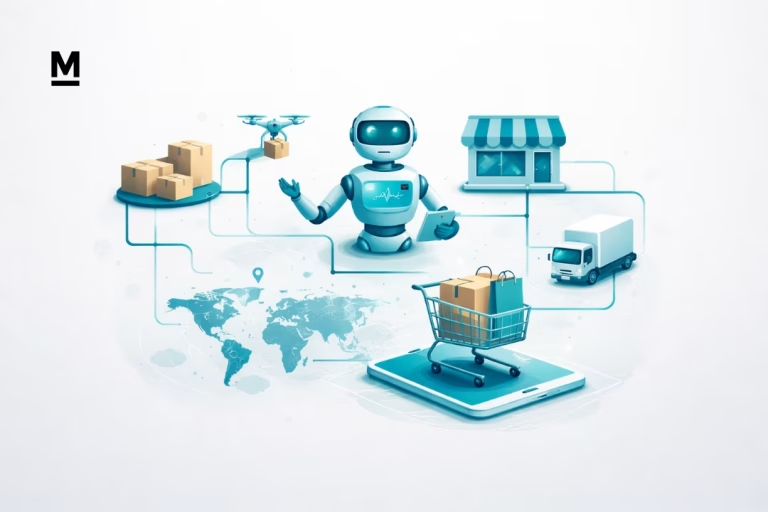
Think of your local farmer’s market, but online and on a massive scale. That’s essentially what an online marketplace is. It’s a digital space that connects multiple sellers with a vast pool of buyers. In simple terms, it’s an e-commerce website where various vendors offer their products or services.
Why are marketplaces so popular today? A few reasons stand out:
- Convenience: Customers can find a wide range of products from different sellers in one place.
- Variety: Marketplaces offer a diverse selection, often exceeding what any single retailer can provide.
- Accessibility: Sellers gain access to a broad customer base without the need for extensive marketing efforts.
Essentially, online marketplaces streamline the buying and selling process, creating a win-win situation for both parties. They provide a platform where sellers can reach more customers, and buyers can find a wider selection of products. To get a better understanding of how these platforms work, it is important to understand the core components that make up an online marketplace.
Table of Contents
Core Components of an Online Marketplace
To understand how online marketplaces function, it’s essential to look at their key elements. These components are what enable smooth transactions and efficient interactions between buyers and sellers.
1. Multi-Vendor Platform:
- At its heart, a marketplace is a multi-vendor platform. This means that numerous independent sellers can list and sell their products on a single website. This is a key difference from a traditional online store, where only one seller offers products. This structure allows for a massive selection of goods.
- This scale is a major draw for both buyers and sellers. Buyers get more choices, and sellers get access to a wider audience.
2. Product Catalog Management:
- Effective marketplaces have robust systems for managing product listings. Sellers must be able to easily upload and organize their products, including descriptions, images, and pricing.
- Clear and accurate product information is crucial for attracting buyers. Marketplaces often provide tools to help sellers manage their catalogs efficiently.
3. Transaction Management:
- Handling payments securely is essential. Marketplaces must provide reliable payment processing systems that protect both buyers and sellers.
- This includes managing order fulfillment, shipping, and returns. The marketplace often acts as an intermediary, ensuring smooth transactions.
4. Seller Management:
- Marketplaces need to onboard and manage sellers effectively. This involves setting clear guidelines, monitoring seller performance, and providing support.
- Maintaining a high standard of seller quality is crucial for building trust with buyers.
Marketplacer as an example:
- Marketplacer provide the technology that enables these core components. Marketplacer offers features that streamline seller onboarding, product catalog management, and transaction processing.
- Marketplacer’s architecture allows for a flexible marketplace that can be customized to fit many business needs.
- Marketplacet also provides marketplace integrations to existing ecommerce platforms. Platforms like Shopify, BigCommerce, SFCC, Magento 2, and pretty much all commonly used e-commerce platforms. This makes it so you don’t need to build a marketplace from scratch but just expand your existing platform.
These components work together to create a seamless experience for both buyers and sellers. When these elements are managed effectively, the marketplace can thrive.
Benefits of Online Marketplaces
Online marketplaces offer a range of advantages, making them attractive to buyers, sellers, and marketplace operators. Let’s break down the key benefits for each group.
For Marketplace Operators:
- Scalability and revenue generation: Marketplaces can scale rapidly, accommodating a growing number of sellers and buyers. Revenue is generated through commissions, fees, or subscription models.
- Data insights and market intelligence: Marketplaces collect valuable data on customer behavior and market trends. This data can be used to optimize the platform and make informed business decisions.
For Buyers:
- Increased product variety and competitive pricing: Buyers gain access to a wide array of products from numerous sellers, often at competitive prices. This variety allows for better comparison shopping and the ability to find niche products that may not be available elsewhere.
- Convenience and ease of shopping: Marketplaces provide a centralized location for shopping, eliminating the need to visit multiple individual websites. This convenience saves time and effort.
For Sellers:
- Access to a larger customer base: Sellers can reach a broader audience than they could through their own standalone online store. Marketplaces have established traffic and customer bases, which can significantly increase sales.
- Reduced marketing and operational costs: Sellers can leverage the marketplace’s marketing efforts, reducing their own advertising expenses. Additionally, marketplaces often handle transaction processing and customer service, lowering operational costs.
- Faster time to market: Sellers can quickly list their products and start selling, without the need to build and maintain their own e-commerce infrastructure.
Essentially, online marketplaces create a mutually beneficial ecosystem. Buyers enjoy greater choice and convenience, sellers gain access to a larger market, and operators generate revenue and valuable data.
Further Reading: Benefits of Transforming Your E-commerce Store to a Marketplace
Real-World Examples and Use Cases of Online Marketplaces
To truly understand the power of online marketplaces, it’s helpful to look at some examples and how they’re used in different industries.
Examples of Successful Marketplaces:
- Think of Amazon. It’s a prime example of a general open marketplace, hosting millions of sellers and a vast array of products.
- Etsy focuses on handmade and vintage items, showcasing how marketplaces can cater to niche markets.
- Tesco, on the other hand, used an online marketplace to expand its product range.
- Myer also used a curated marketplace approach in order to offer complementary products together with their first party products. Further boosting their revenue.
- Industry-specific marketplaces are also common. For example, there are platforms dedicated to selling industrial equipment, agricultural products, or even digital services.
Related Resource: Marketplace Success Stories & Case Studies
Examples Based on Different Marketplace Models:
- B2B Marketplaces (Business-to-Business): These marketplaces connect businesses with other businesses. For example, a platform where manufacturers sell raw materials to retailers.
- B2C Marketplaces (Business-to-Consumer): These are the most common, connecting businesses directly with individual consumers, like most retail marketplaces.
- Peer-to-Peer Marketplaces (P2P): These platforms facilitate transactions between individuals, like online marketplaces for used goods or rental services.
Related Resource: Marketplace Business Models: Types & Revenue Models
How Different Retail Businesses Can Utilize a Marketplace:
- Small Retailers: Marketplaces provide a low-cost way to expand their storefront without the need for a physical storefront or extensive marketing.
- Large Enterprises: Established brands can use marketplaces to reach new customer segments, penetrate new markets, or test new product lines.
- Niche Businesses: Businesses with specialized products can use online marketplaces in order to offer complementary products on their first party products.
- Dropshippers: Individuals or businesses can use a marketplace platform to expand to a multi-vendor dropshipping storefront, increasing their overall profitability.
Related Resource: Marketplace Use Cases
By looking at these examples, you can see how versatile online marketplaces are. They can be adapted to fit a wide range of business models and industries.
Conclusion: Embracing the Marketplace Future
Online marketplaces are more than just a trend; they represent a fundamental shift in how we do business. They connect buyers and sellers in ways that were previously unimaginable, offering benefits to everyone involved.
By now, you should have a clear understanding of what an online marketplace is, its core components, and the advantages it offers.
To recap, marketplaces provide:
- For buyers: Increased variety, competitive pricing, and convenience.
- For sellers: Access to a larger customer base and reduced operational costs.
- For operators: Scalability and revenue generation.
The potential of online marketplaces is vast. Whether you’re a small retailer looking to expand your reach or a large enterprise seeking new revenue streams, a marketplace strategy can be a game-changer.
If you’re considering launching your own marketplace or wanting to scale your retail business, it’s crucial to choose the right platform. Marketplacer offers the flexibility and scalability needed to build a successful marketplace. It’s designed to handle the complexities of multi-vendor environments, providing the tools you need to manage sellers, transactions, and product catalogs efficiently.
Don’t just observe the marketplace revolution; be a part of it. Contact us and scale your business with an online marketplace strategy.
Frequently Asked Questions (FAQ) About Online Marketplaces
What is the difference between an online store and an online marketplace?
An online store is typically run by a single retailer selling their own products. An online marketplace, on the other hand, is a platform where multiple independent sellers offer their products to buyers. Think of it like a digital shopping mall, where many different shops operate under one roof.
How do online marketplaces make money?
Marketplaces generate revenue through various methods. The most common is by charging sellers a commission fee on each sale. Some marketplaces also charge listing fees, subscription fees for premium seller features, or advertising fees for promoting products.
What are the benefits of selling on an online marketplace?
Selling on a marketplace gives you access to a large, established customer base. You can reduce marketing costs, as the marketplace handles much of the promotion. It also simplifies transaction processing and often provides tools for managing your product listings and inventory.
Is it expensive to start an online marketplace?
The cost of starting a marketplace varies greatly. It depends on the complexity of the platform and the features you need. Using a platform like Marketplacer can help reduce development costs by providing ready-to-use tools and infrastructure. However, you’ll still need to factor in costs for marketing, customer support, and ongoing maintenance.
How do I choose the right online marketplace platform for my business?
Consider factors like scalability, flexibility, seller management tools, transaction processing, and user experience. Ensure the platform supports your business model and integrates with your existing systems. Marketplacer is a great option due to its adaptability and comprehensive features.